• Phone: 313-833-1300

Hannan Blog

So You’re a Caregiver Now. Nobody Asked You.

So You’re a Caregiver Now. Nobody Asked You. 150 150 MARCOM

You didn’t apply for this job. There was no interview, no offer letter, no onboarding packet. One day life was normal, and the next you were Googling “how to get a grown adult to take a pill” at 11pm. Welcome.

Here’s the thing nobody tells you upfront: caregiving is less about grand gestures and more about figuring out why your dad hides his hearing aids in the freezer. It’s logistics. It’s negotiation. It’s occasionally hiding vegetables in places they’ll never find them.

A few things that actually help:

Pick your battles — and pick them early.

If your mom wants to wear her winter coat to bed, ask yourself honestly: does this hurt her? No? Let it go. Save your energy for the fights that matter, like making sure she takes her blood pressure medication. You cannot win every argument with someone who has been doing things their way for 80 years. You will lose. Move on.

Routines are your best friend.

People — especially those with memory issues — do better when Tuesday feels like Tuesday. Same wake time, same breakfast, same afternoon walk. Predictability isn’t boring when you’re the one keeping the wheels on. It’s survival.

Get the paperwork done before you need it.

Power of attorney, advance directives, insurance cards, medication lists — gather all of it now, while things are calm. The emergency room at 2am is not where you want to be saying, “I think his doctor’s name starts with a P.”

Ask for help out loud.

People say “let me know if you need anything” and mean it. They just won’t show up uninvited. Tell your neighbor you need someone to sit with Dad for two hours on Thursday. Text your sibling a specific task. “Can you handle the pharmacy run this week?” is a complete sentence.

You are not the only one who needs care.

Daybreak exists for exactly this reason. A few hours of respite during the day — where your loved one is engaged, safe, and around other people — can be the difference between a caregiver who’s coping and one who’s running on empty. Use it without guilt.

Caregiving is hard. You’re doing it anyway. That counts for something.

Occupational Therapy Program: Helping Seniors Stay Strong, Independent, and Connected

Occupational Therapy Program: Helping Seniors Stay Strong, Independent, and Connected 150 150 MARCOM

This past year, our occupational therapy program has become a lifeline for hundreds of Detroit seniors and their families. With the help of our licensed staff, graduate interns, and community partners, we’ve been able to bring practical, hands-on support right where it’s needed most—whether that’s in a senior’s apartment, at DayBreak, or over the phone when someone is feeling isolated.

The impact is easy to see. More than 120 older adults received one-on-one assessments from occupational therapists who helped them make simple changes—like rearranging furniture to prevent falls, adding grab bars, or learning exercises to build balance and strength. These may seem like small things, but they mean the difference between staying independent at home or risking a dangerous fall. Caregivers also benefited from personalized consultations, giving them strategies to make daily life safer and less stressful.

We also introduced group sessions in senior apartment buildings, where neighbors come together not just to exercise, but to connect. One resident who had been withdrawn for months began showing up early, chatting with classmates, and even practicing at home after an intern connected with him in Spanish. That moment of recognition built a bridge—not only to better health, but to community.

Our reach extends beyond therapy exercises. Through partnerships with United Way and other local groups, we distributed care packages and offered reassurance calls to older adults who rarely leave their homes. We also created an emergency fund that stepped in when seniors faced urgent crises—like the veteran who needed a safe place to recharge his wheelchair or the woman at risk of eviction after identity theft stole her benefits.

For families navigating dementia, our DayBreak program added something new and joyful: therapy dogs. The arrival of Skadi the poodle and Andi the labrador has sparked laughter, calmed anxieties, and given caregivers a break from the constant weight of worry. Caregivers tell us those visits don’t just brighten the day—they lighten the load.

Our occupational therapy program shows what’s possible when practical expertise meets compassion: seniors can stay strong, safe, and connected, and caregivers can breathe a little easier knowing they’re not alone.

Eye Care for Detroit: Free Screenings at Hannan Center This June

Eye Care for Detroit: Free Screenings at Hannan Center This June 150 150 MARCOM

In honor of Cataract Awareness Month, Eye Care for Detroit is proud to host a free eye screening event at the Hannan Center on Saturday, June 28th from 9 AM to 1 PM. The event will offer diabetic eye exams and cataract screenings, helping raise awareness and improve access to essential vision care in the city of Detroit.

With over 40,000 homebound Detroiters at risk for preventable vision loss, this initiative provides an important step toward health equity and community support. Early detection of eye conditions can dramatically change lives, especially for older adults and individuals managing chronic conditions like diabetes.

📍 Location: 4750 Woodward Ave, Detroit, MI 48201
📞 More Info: (313) 644-3233
🌐 Visit: www.eyecarefordetroit.org

Join us in supporting this mission and help spread the word. Your outreach can help someone see the future more clearly.

Hannan Center in the Headlines: “Detroit’s Hannan Center called ‘one of Michigan’s best-kept secrets’ for senior citizens”

Hannan Center in the Headlines: “Detroit’s Hannan Center called ‘one of Michigan’s best-kept secrets’ for senior citizens” 1024 1536 MARCOM

We’re proud to share that Hannan Center was recently featured in the Detroit Free Press for our work in creating a welcoming, supportive space for older adults in Midtown Detroit—especially those living with dementia and memory-related challenges.

The article spotlights how we’re not just serving seniors; we’re building community. Through innovative programming, art, music, and compassionate care, Hannan is helping older adults live with purpose, connection, and dignity.

We invite you to read the full piece and learn more about the impact we’re making every day:

Read the article on the Detroit Free Press

Thank you to all of our supporters, staff, and volunteers who make this work possible. Together, we are reimagining what aging looks like in Detroit.

A SAFETY NET PERIL: HOW EXECUTIVE ORDERS AND FEDERAL BUDGET CUTS THREATEN MICHIGAN’S SENIORS

A SAFETY NET PERIL: HOW EXECUTIVE ORDERS AND FEDERAL BUDGET CUTS THREATEN MICHIGAN’S SENIORS 1024 1024 MARCOM

By Vincent Tilford, President & CEO, Hannan Center

For a century, the Luella Hannan Memorial Foundation, now known as the Hannan Center, has been a pillar of support for older adults in metro Detroit. Concerned about seniors facing financial hardships, Luella Hannan, the wife of William Hannan and heiress to his fortune, set out to build a home for those with nowhere else to turn during crisis times. Her plans to develop a retirement home fell through when she could not secure a suitable development site. So, she pivoted to providing monthly living stipends for seniors.  

During the Great Depression, but before the creation of Social Security, Medicare, and Medicaid, the demand for Hannan’s assistance nearly bankrupted the organization’s resources, forcing it to turn many seniors away. That moment in history feels strikingly relevant today.  

President Donald Trump’s recent executive orders propose sweeping changes to federal programs that millions of Americans rely on. These include an $880 billion reduction to Medicaid, job cuts at the Social Security Administration (SSA), layoffs at the Department of Veterans Affairs (VA), and reductions in Medicare reimbursement rates. Slashing support to these essential insurance and safety net programs will plunge Michigan’s seniors and vulnerable populations into a crisis reminiscent of the 1930s. 

Medicaid is a critical safety net for low-income individuals, including many older adults. KFF, a leading nonpartisan organization focused on health policy and health-related issues, reported that more than 2.6 million Michigan residents depend on Medicaid for health care coverage. This number includes 157,000 seniors, 326,000 people with disabilities, and over 1 million adults covered under the Healthy Michigan Plan. KFF also reports that Medicaid covers 38% of all births in the state.   

According to KFF, there are at least 53,000 people – seniors, children, and individuals with disabilities— in every Congressional District that rely on Medicaid. In Southwest Michigan alone, over 270,000 residents depend on it for health care, according to the Michigan Health and Hospital Association. In Kalamazoo County, nearly one in four, or more than 60,000 residents, use Medicaid. Across Calhoun County and neighboring areas like Berrien and Van Buren counties, as many as one-third of residents are enrolled in the program. These proposed cuts would force Michigan into an impossible choice: raise taxes to fill the gap or reduce coverage—both of which would harm families. 

Beyond Medicaid cuts, the SSA plans to reduce its workforce. Long wait times at government offices are already frustrating, but fewer SSA employees will only exacerbate delays in retirement benefits and disability claims. These delays create an existential crisis for those who rely on Social Security checks to cover necessities like housing and food. 

Meanwhile, the VA intends to lay off 80,000 employees by August—rolling back staff levels established under the PACT Act. This legislation expanded veterans’ health care and benefits for those exposed to toxic substances during military service.  

Senior veterans in Michigan already face long wait times at VA centers like the one in Detroit; losing more staff will lead to even longer delays or force some veterans to seek unaffordable private care—or worse yet—go without treatment altogether. 

The current administration is also sending Medicare to the cutting room floor. The 2025 Medicare Physician Fee Schedule (PFS) includes a 2.83% reduction in the reimbursement payments that hospitals and physicians receive.  

Previous Medicare reimbursement reductions have strained local hospitals in rural Michigan, forcing some to reduce services or close entirely. With the median age for counties in Michigan’s northern lower peninsula being among the highest in the nation, those communities can’t afford to have more hospital closures or doctors refusing to accept more Medicare patients because of low reimbursement rates. 

An NIH-funded study found that past Medicare reimbursement cuts negatively impacted patient outcomes. Additional funding reductions could lead to more hospital closures or force physician practices to turn away Medicare-insured patients. Families providing care for aging parents or disabled relatives would face even more tremendous financial strain as they try to fill gaps left by these cuts. Local economies would also suffer as federal healthcare investments disappear. 

Michigan’s congressional representatives will be crucial in deciding whether these cuts move forward. Two key figures—John James (MI-10) and Debbie Dingell (MI-6)—sit on the House Committee on Energy and Commerce, which oversees Medicaid funding. Representative Dingell has consistently championed Medicare, Medicaid, and Social Security programs while advocating for veterans.  

Representative James, who is a veteran, faces a tough decision.   Will he align with his party’s budget proposals or stand up for constituents who rely on Medicaid and VA services? Their choices will have profound consequences for Michigan residents. 

Hannan’s history reminds us that when safety nets fail, communities must step up—but even organizations like Hannan have limits when resources are stretched too thin. During the Great Depression, Hannan was forced to turn away seniors because it simply couldn’t meet demand. We cannot let history repeat itself. 

Michigan’s representatives must act now to protect older adults from these devastating cuts. Their votes will determine whether seniors live with dignity—or endure another era of uncertainty. 

Ageism Awareness: Let’s Value People at Every Age

Ageism Awareness: Let’s Value People at Every Age 2560 1707 Jerald McBride

By Vincent Tilford, CEO and President, Hannan Center

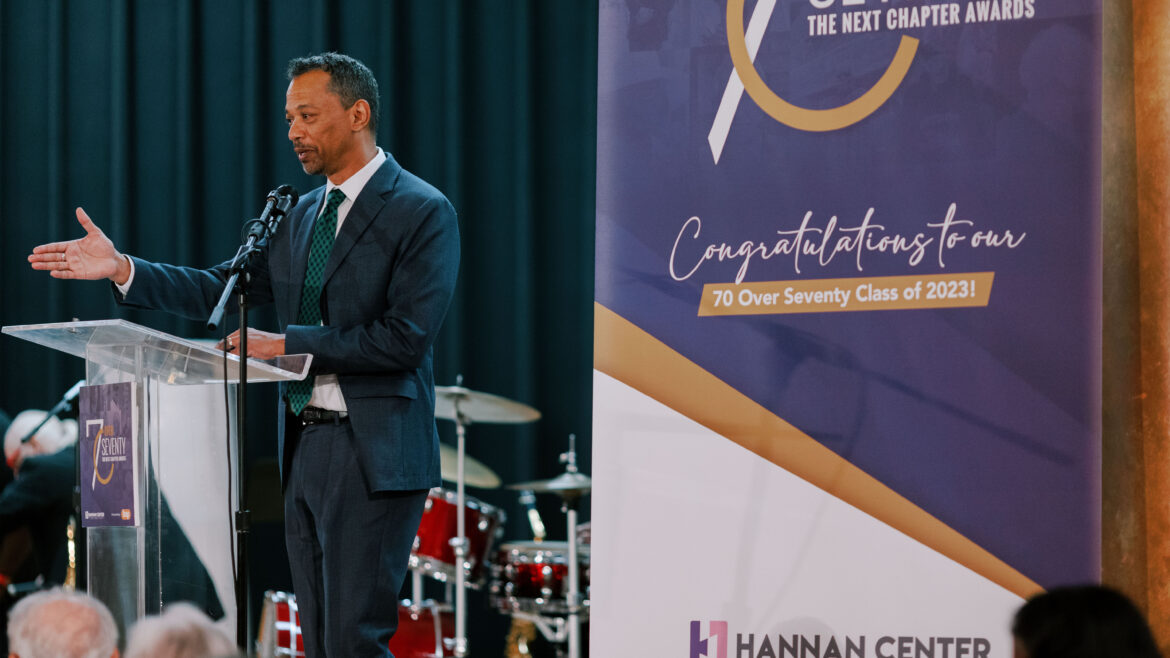
This November 9, 400 people will gather at a Detroit hotel to celebrate 70 adults over the age of 70 who prove every day that impact is ageless.

From dynamic changemakers, entrepreneurs, lifelong learners and achievers, to energetic community leaders, unsung heroes and artists, this collection of high-octane Metro Detroiters is defying long-held stereotypes and perceptions about getting older.

Each day in America some 10,000 people turn 65. By 2050, this group of older adults is projected to increase to 82 million: representing some 23 percent of the nation’s total population.1

Despite this trend, or perhaps because of it, ageist attitudes remain pervasive in our culture. Often dubbed one of the last socially acceptable forms of discrimination, ageism adversely impacts how we think, feel and act toward older adults. Even worse, research shows it robs this group of precious, productive years.

At Hannan Center, we see ageism in healthcare, employment and housing, but it’s harder to pick out in popular culture.

How often have you heard “you look great for your age,” that old dogs can’t be taught new tricks or that “50 is the new 30”? Each of these expressions suggest age is undesirable and only youth holds value.

During the pandemic, “boomer remover” became a popular hashtag on Twitter as hospitals and clinicians struggled to keep ageism out of initial treatment strategies and policies. Today, there is a wealth of research showing that, indeed, ageist discrimination impacted older adults globally during COVID.

In short, cruel ageist stereotypes and language weave their way through our cultural narrative, informing how we view aging in others and, in time, ourselves.

In just 10 years, the US Census Bureau says there will be 77 million people aged 65 and older compared to 76.5 million under the age of 18. By the end of this century, the world’s median age for the first time will have shifted to older adults outnumbering their younger equivalents.

So, as these demographic ratios change, it’s in everyone’s best interest to view contributions from older people through an “aging” lens free of societal filters. In this way we begin to see the benefits of a vibrant, engaged and essential older America.

For instance, older people comprise the largest group of unpaid caregivers for family, friends and neighbors. For nonprofits, they are critical resources and dedicated activists able to donate time and financial support. Because of their experience, older adults are valuable mentors and advocates and can be key to a shrinking workforce.

In Detroit, let’s extend efforts to attract new residents that are both young and older. Older adults typically have steady incomes, are active in their communities, are strong consumers and add a rich layer of diversity to an already varied cityscape.

Of note is Detroit’s recent status (in June 2024) as a member of AARP’s Network of Age-Friendly States and Communities. As such, programs and initiatives are now in place to strengthen neighborhoods for every age group.

Eight years ago, Hannan Center launched its 70 Over Seventy Next Chapter Awards to counter the bounty of recognition typically reserved for younger community mavens. Our goal then, as now, wasn’t to diminish early achievement. Instead, we simply wish to acknowledge the remarkable and continued contributions of older adults still worthy of the same value, respect and dignity as their younger counterparts.

Learn more at hannan.org. Get more information about ageism at ageism.org and the American Society on Aging at asaging.org.

1] U.S. Census Bureau, 2023 National Population Projections Tables: Main Series.

Meet Sue Probert, Social Worker at Hannan Center

Meet Sue Probert, Social Worker at Hannan Center 2560 1707 Jerald McBride

At times, Sue Probert, a licensed social worker, actually runs to meet Hannan Center client needs. Joining the social services team a little more than a year ago, she hasn’t stopped since.

“I oversee five different support group meetings in locations across the city and one group that meets via Zoom,” Sue explained. “Each week, I bring a snack and a discussion topic important to older adults. We’ve talked about avoiding scams, the benefits of journaling, even how to love yourself.”

In all, Sue estimates she sees up to 60 Hannan Center clients every month either in group settings or one-on-one.

With more than two decades of social work experience, she understands the types of challenges her clients encounter and the ins and outs of finding solutions.

“Housing is our single biggest request for assistance. Clients come to us after unsuccessful attempts to access resources through government agencies. I’ve learned that people, especially with disabilities, often need help navigating the initial phone call to a potential resource,” Sue said.

Furniture is another top need among Hannan Center clients. And property tax assistance, too.  With Sue’s passion and tenacity, it nearly always pays off for clients as she taps into programs aiding older adults in Detroit and throughout southeast Michigan.

“The best part of my job is seeing results and the look on our clients’ faces when we come through for them. After furnishing a woman’s apartment, she sent me a photo and seemed ready to cry. I was just thrilled to actually help someone.

“Hannan Center’s mission is to support senior citizens living in the setting of their choice and staying in their homes. And with the many activities we provide here, we do just that. I can’t think of a single place combining a senior center, art gallery, and creative aging programs. That makes us unique.”

When she’s not rushing to support Hannan Center clients, you’ll find Sue nurturing her penchant for bluegrass music, carefully observing Michigan’s abundance of native plants, a skill she learned from her father, or simply enjoying her two children. It is how she stays grounded.

“My work is like standing in a stream, the need just goes on and on,” Sue observed. “But for the 20 years I’ve been a social worker, I’ve managed to find balance and great satisfaction in what I do.”

Meet Mary Meyer Neff: Member of the board since 2006

Meet Mary Meyer Neff: Member of the board since 2006 1920 1080 Jerald McBride

Mary Neff has been connected to Hannan Center since the early 1990s when she was a social worker at a nonprofit community health organization. Specializing in older-adult mental health, Mary ran a program at Hannan Center at the time and often served with Hannan’s professionals on local older-adult advisory boards. “From the very beginning, I experienced at Hannan Center the same passion and dedication as I had for keeping older adults engaged and fulfilled,” Mary shared. “I immediately got more involved with their work and in 2006, two years before I retired, joined the Center’s board.”

Change Agent

In her board role, Mary was instrumental in Hannan Center’s transition from a residence to a service organization that delivers critical social assistance, a host of creative aging programs and respite care for people with dementia and their caregivers. “I served on the advisory committee supporting Hannan Center’s monumental shift from providing senior housing to reimagining how we could best support older adults in their homes,” Mary said. Today, many of the organization’s programs are available to seniors where they live or are accessible via the internet.

Social Activation

Mary says seniors aren’t one-dimensional … or just sick people either. And that’s why she’s devoted her life to treating, and advocating for, older adults. It’s no surprise then that Mary, who resides in a senior living community, continues to put “social” into her everyday activities. In addition to her active role at Hannan Center, Mary leads several groups in her community. “I help bring entertainment, education, even programs from Hannan Center to the residents in my community. I help acclimate new residents, organize an annual expo and staff other events,” Mary explained.

Clearly, Mary practices what she preaches. She’s a force of “social” nature tirelessly working to keep people connected and active. “People have aspirations their whole life. And I’ve had the privilege of helping my clients, my friends and the good people at Hannan continue to dream and realize those aspirations. I am an older adult and every day I have the opportunity to continue my passion and my work. I like being involved and, thanks to Hannan Center, I am.”

Learn more about Hannan Center here.

Hannan Center’s Occupational Therapy Helps Older Adults Stay Fluid and Engaged

Hannan Center’s Occupational Therapy Helps Older Adults Stay Fluid and Engaged 1920 1080 Jerald McBride

Occupational therapist Stephen Souaid isn’t dedicated to getting his clients at Hannan Center back to work. Instead, he’s focused on understanding the myriad roles in which they engage as older adults.

From parent, sibling, aunt, and grandmother to caretaker, card player, puzzle solver, artist, and more, occupational therapy at Hannan Center helps ensure Detroit’s senior residents age successfully in their homes and stay connected to the vibrant community around them.

Hannan Center believes the region’s adults – 55 and older – deserve to age with respect and a sense of purpose, no matter how many years they’ve got behind them. That’s why it provides a suite of social services designed to counteract the effects of ageism and the unseen barriers of a youth-focused society.

“Without Hannan Center, there would be a significant loss in services for older adults, particularly for those living in older adult apartments,” said Melissa Draughn, director of social services at the center. “I believe we’d see a marked increase in isolation, too.”

Group Therapy

Stephen spends his days at area senior apartment complexes in classes designed for residents living on their own. He’s also an integral part of Hannan Center’s Daybreak program, which provides care for older adults with dementia and respite for their caregivers.

“We’re meeting older adults where they are and with the services they need because those services aren’t available, have a high out-of-pocket cost, or aren’t covered by insurance,” Stephen shared.

Hannan Center provides its offsite occupational therapy free of charge. In group settings, Stephen helps participants increase their physical activity level while answering questions about their durable medical equipment and potential in-home barriers to mobility.

Dementia Care

For Daybreak clients, Hannan Center’s occupational therapy is an added resource in an area that is often underserved. Stephen’s role is to help educate caregivers about how to adapt to dementia as the disease progresses.

“We educate the caregivers on different types of interventions, routines, and activities that engage the person with dementia and ultimately prevent that person from being placed in a nursing home or a memory care unit,” Stephen explained.

Perhaps most important, the driving goal for all the staff on Hannan Center’s social services team is the desire to ensure their older adult clients age with dignity and respect.

Learn more about Hannan Center’s occupational therapy program and other social services by visiting hannan.org/social-work.

See Hannan Center’s creative aging programs here.

Health & Wellness – The Silver Linings of Aging

Health & Wellness – The Silver Linings of Aging 1920 1080 Hannan Center

Shared by Vincent Tilford – CEO/President Hannan Center, Midtown Detroit

Growing old is like a surprise party you knew was coming but still were not quite prepared for. When we are young, we poke fun at aging, playfully tossing around terms like “fossil” and “past your prime” at anyone over the age of 30. Fast forward a few decades, and suddenly, we have more hair in the comb than on our heads. Nine p.m. becomes the new midnight (8:00 pm for me), and our bodies now provide their own soundtrack of creaks and groans every time we stand. But aging is not just about embracing self-deprecating humor, I believe it’s an art form, a skill we can refine with a few simple tricks that don’t require us to be “super seniors” with Pepsodent smiles and bottomless wallets to enjoy anything that life has to offer.

Let us start with the timeless adage, “Use it or lose it.” In the bloom of youth, a gym membership is a ticket to flexing in front of mirrors while casually lifting weights. As the years add up, it is less about the flex and more about being able to tie your shoes without sounding like a grunting sow.

Bending over to touch your toes turns from a simple stretch, into an episode of “Twister: Solo Edition.” Yoga classes transform from a cool-down exercise to an essential routine, ensuring you can don your socks without calling for backup. It is not about bulking up anymore but ensuring you can walk up a set of stairs without drafting a will halfway.

As we age, who said exercise needs to be a chore? We can easily find ways to integrate more movement into daily life. Take the stairs instead of the elevator – consider it your personal Everest. Park your car at the far end of the lot; those extra steps count, even when it feels like a trek across the Sahara. Get outdoors – walk, hike, or garden. It is not just about admiring nature; it is about ensuring you can still navigate through it all without needing a GPS or a personal sherpa. The goal is to aim for being just out of breath, not so much that you feel in need of a lung transplant.

Now, let us talk about social gymnastics. Being socially active is like kale for your brain, minus the bitter aftertaste. Chatting with friends, arguing with family, and engaging with community members are not just fun pastimes; they are essential for mental fitness. These interactions are crucial in dealing with the stresses of aging, from health issues to losing loved ones. And being social can help slow down the brain’s version of rust – – –
cognitive decline. Every discussion is a chance to oil the cogs in your mind, keeping
them running smoothly. So, dive into conversations, join clubs, or engage in healthy
gossip (ok, maybe nix the gossip). Your older brain will thank you!

A final thought, one of the best things we can do for our aging bodies is to feed our minds with positive thoughts on becoming older. Dr. Becca Levy, in her insightful book “Breaking the Age Code,” highlights the power of positive thinking in aging. She found those harboring positive beliefs about growing old extend their life expectancy by a whopping 7.5 years. That is right! Being optimistic about aging does not just make you a pleasant person to be around; it is practically a life extender. Levy’s research is atestament to the mind-body connection, showing how our attitudes towards aging can physically shape our health. Remember, thinking young is not about denial; it is about defiance!

Aging with grace is not about breaking the laws of biology. It is about embracing them with a wink and a nod. It is acknowledging that while you may not be the spring chicken you once were, you are now a seasoned bird with more stories to tell. It is about finding humor in the new realities, like marveling at the newfound ability to predict the weather with your knee pain or celebrating the senior discounts that feel like society’s payback for making it this far.

In essence, aging well is a blend of physical activity, social engagement, and a healthy dollop of positive thinking. It is about moving enough to keep the joints oiled, socializing often to keep the brain sharp, and plenty of laughter to keep the heart light. If life is a journey, then aging is just taking the scenic route – slower, yes, but with so much more to admire. So, as we march (or sometimes hobble) into our golden years, let us do it with a smile on our faces, a spring in our step (or at least a determined shuffle), and an unwavering belief that the best is yet to come.