• Phone: 313-833-1300

Blog New

Tilford: Age isn’t a fair measure of driving ability

Tilford: Age isn’t a fair measure of driving ability 1220 691 Nadia Marinova

Vincent Tilford, April 12, 2026, 8:00 p.m. ET

When something tragic happens on the road, it stays with us. It should. A life lost is never just a headline; it is personal, painful and it makes us want to act. But when we build policy on emotion instead of the full picture, we risk solving the wrong problem.

Newly proposed legislation from Sen. Rosemary Bayer, D-West Bloomfield, would tighten rules for drivers over 75 with more tests, more frequent renewals and more scrutiny. The logic sounds simple: crashes involving older drivers are going up. But there is an important piece missing.

There are now more older drivers than ever before, more than 1.8 million in Michigan alone. It is the fastest-growing group on the road. When any group grows that quickly, the number of crashes involving them will rise too. That does not tell us that they are less safe. National data show that while older adults are a growing share of drivers, they are generally in fewer crashes per licensed driver than teens and young adults, who are consistently overrepresented in police reported crashes. In other words, older drivers are not the group most likely to be involved in crashes once you account for how many of them are on the road.

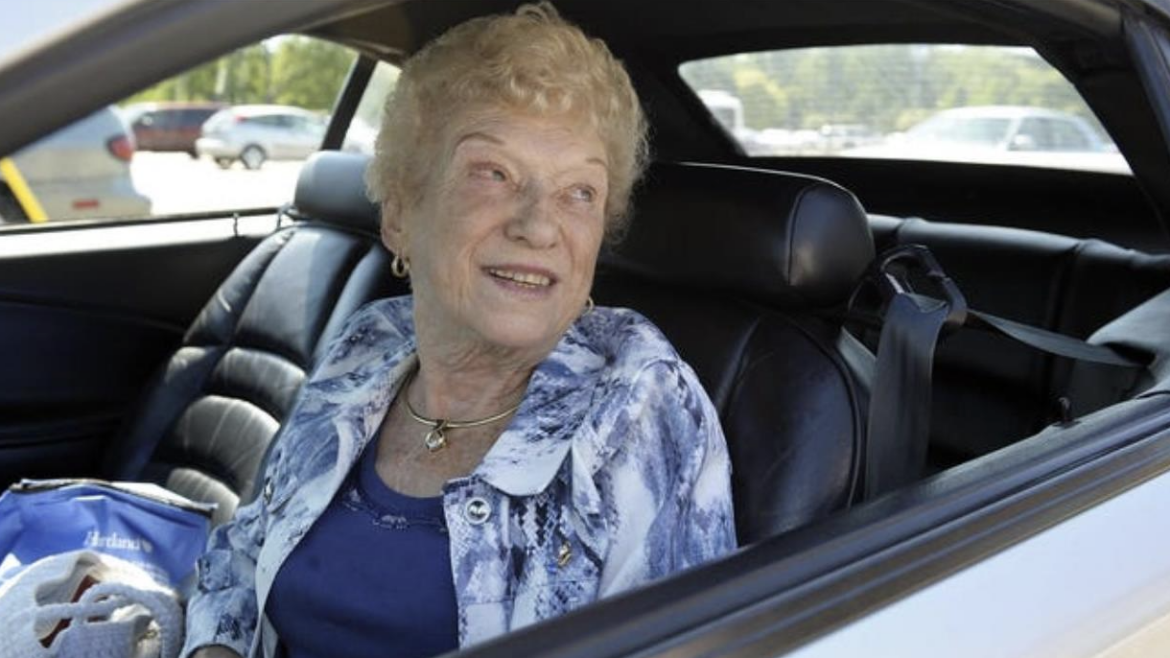
Real life reflects that. My mother drove until about six months before she passed away, at 95. She knew her limits: no night driving and no long distances. In the last 25 years of her life, she was in one accident, caused by another driver who ran a light. I felt more comfortable riding with her than with my youngest son when he was a teenager. Within a month of getting his first car, he was in a crash. That story is not about blaming young people. It is a reminder that risk does not come with a simple age label, yet that is how this debate is being framed.

We often hear that older drivers make up a higher share of fatal crashes than of crashes overall. That sounds like proof they are more dangerous, but it is not. Older adults are more physically vulnerable. When a crash happens, they are more likely to be seriously hurt or killed. That is about fragility, not recklessness. They are more likely to die in a crash, not more likely to cause one.

Many older adults also change how they drive. They avoid night driving, stay off highways and make shorter, more deliberate trips. My 89-year-old

mother-in-law runs her own small hair products distribution business. She is on the road most days, plans her routes carefully and avoids driving at night. She lives alone and supports herself. If we make it harder for her to drive based on age instead of ability, we are not just adding a safety measure. We are threatening her independence and livelihood.

Even safety-focused organizations have said that age alone is not a reliable way to judge fitness to drive. Some people decline earlier. Others stay sharp into their 80s and 90s. A number on a license does not tell the whole story. Ability does.

If we truly care about safer roads, we should focus on what actually matters: vision, reaction time, cognitive health, medication use and driving record. We should apply those standards fairly across all ages, because unsafe driving is not limited to one generation. And neither is good driving.

We all want safer streets and fewer tragedies. We will not get there by pointing at one age group and calling that a solution. Before we change the rules of the road for older Michiganians, we should make sure we are not taking independence away from people who are still driving safely. Sometimes, the safest driver in the family is not the youngest one.

Vincent Tilford is president and CEO of the Hannan Center, a non-profit serving older adults in metro Detroit.


Originally published in the Detroit News: https://www.detroitnews.com/story/opinion/2026/04/12/tilford-proposed-driving-laws-in-michigan-target-older-adults/89551540007/

Eye Care for Detroit: Free Screenings at Hannan Center This June

Eye Care for Detroit: Free Screenings at Hannan Center This June 150 150 MARCOM

In honor of Cataract Awareness Month, Eye Care for Detroit is proud to host a free eye screening event at the Hannan Center on Saturday, June 28th from 9 AM to 1 PM. The event will offer diabetic eye exams and cataract screenings, helping raise awareness and improve access to essential vision care in the city of Detroit.

With over 40,000 homebound Detroiters at risk for preventable vision loss, this initiative provides an important step toward health equity and community support. Early detection of eye conditions can dramatically change lives, especially for older adults and individuals managing chronic conditions like diabetes.

📍 Location: 4750 Woodward Ave, Detroit, MI 48201
📞 More Info: (313) 644-3233
🌐 Visit: www.eyecarefordetroit.org

Join us in supporting this mission and help spread the word. Your outreach can help someone see the future more clearly.

Hannan Center in the Headlines: “Detroit’s Hannan Center called ‘one of Michigan’s best-kept secrets’ for senior citizens”

Hannan Center in the Headlines: “Detroit’s Hannan Center called ‘one of Michigan’s best-kept secrets’ for senior citizens” 1024 1536 MARCOM

We’re proud to share that Hannan Center was recently featured in the Detroit Free Press for our work in creating a welcoming, supportive space for older adults in Midtown Detroit—especially those living with dementia and memory-related challenges.

The article spotlights how we’re not just serving seniors; we’re building community. Through innovative programming, art, music, and compassionate care, Hannan is helping older adults live with purpose, connection, and dignity.

We invite you to read the full piece and learn more about the impact we’re making every day:

Read the article on the Detroit Free Press

Thank you to all of our supporters, staff, and volunteers who make this work possible. Together, we are reimagining what aging looks like in Detroit.

A SAFETY NET PERIL: HOW EXECUTIVE ORDERS AND FEDERAL BUDGET CUTS THREATEN MICHIGAN’S SENIORS

A SAFETY NET PERIL: HOW EXECUTIVE ORDERS AND FEDERAL BUDGET CUTS THREATEN MICHIGAN’S SENIORS 1024 1024 MARCOM

By Vincent Tilford, President & CEO, Hannan Center

For a century, the Luella Hannan Memorial Foundation, now known as the Hannan Center, has been a pillar of support for older adults in metro Detroit. Concerned about seniors facing financial hardships, Luella Hannan, the wife of William Hannan and heiress to his fortune, set out to build a home for those with nowhere else to turn during crisis times. Her plans to develop a retirement home fell through when she could not secure a suitable development site. So, she pivoted to providing monthly living stipends for seniors.  

During the Great Depression, but before the creation of Social Security, Medicare, and Medicaid, the demand for Hannan’s assistance nearly bankrupted the organization’s resources, forcing it to turn many seniors away. That moment in history feels strikingly relevant today.  

President Donald Trump’s recent executive orders propose sweeping changes to federal programs that millions of Americans rely on. These include an $880 billion reduction to Medicaid, job cuts at the Social Security Administration (SSA), layoffs at the Department of Veterans Affairs (VA), and reductions in Medicare reimbursement rates. Slashing support to these essential insurance and safety net programs will plunge Michigan’s seniors and vulnerable populations into a crisis reminiscent of the 1930s. 

Medicaid is a critical safety net for low-income individuals, including many older adults. KFF, a leading nonpartisan organization focused on health policy and health-related issues, reported that more than 2.6 million Michigan residents depend on Medicaid for health care coverage. This number includes 157,000 seniors, 326,000 people with disabilities, and over 1 million adults covered under the Healthy Michigan Plan. KFF also reports that Medicaid covers 38% of all births in the state.   

According to KFF, there are at least 53,000 people – seniors, children, and individuals with disabilities— in every Congressional District that rely on Medicaid. In Southwest Michigan alone, over 270,000 residents depend on it for health care, according to the Michigan Health and Hospital Association. In Kalamazoo County, nearly one in four, or more than 60,000 residents, use Medicaid. Across Calhoun County and neighboring areas like Berrien and Van Buren counties, as many as one-third of residents are enrolled in the program. These proposed cuts would force Michigan into an impossible choice: raise taxes to fill the gap or reduce coverage—both of which would harm families. 

Beyond Medicaid cuts, the SSA plans to reduce its workforce. Long wait times at government offices are already frustrating, but fewer SSA employees will only exacerbate delays in retirement benefits and disability claims. These delays create an existential crisis for those who rely on Social Security checks to cover necessities like housing and food. 

Meanwhile, the VA intends to lay off 80,000 employees by August—rolling back staff levels established under the PACT Act. This legislation expanded veterans’ health care and benefits for those exposed to toxic substances during military service.  

Senior veterans in Michigan already face long wait times at VA centers like the one in Detroit; losing more staff will lead to even longer delays or force some veterans to seek unaffordable private care—or worse yet—go without treatment altogether. 

The current administration is also sending Medicare to the cutting room floor. The 2025 Medicare Physician Fee Schedule (PFS) includes a 2.83% reduction in the reimbursement payments that hospitals and physicians receive.  

Previous Medicare reimbursement reductions have strained local hospitals in rural Michigan, forcing some to reduce services or close entirely. With the median age for counties in Michigan’s northern lower peninsula being among the highest in the nation, those communities can’t afford to have more hospital closures or doctors refusing to accept more Medicare patients because of low reimbursement rates. 

An NIH-funded study found that past Medicare reimbursement cuts negatively impacted patient outcomes. Additional funding reductions could lead to more hospital closures or force physician practices to turn away Medicare-insured patients. Families providing care for aging parents or disabled relatives would face even more tremendous financial strain as they try to fill gaps left by these cuts. Local economies would also suffer as federal healthcare investments disappear. 

Michigan’s congressional representatives will be crucial in deciding whether these cuts move forward. Two key figures—John James (MI-10) and Debbie Dingell (MI-6)—sit on the House Committee on Energy and Commerce, which oversees Medicaid funding. Representative Dingell has consistently championed Medicare, Medicaid, and Social Security programs while advocating for veterans.  

Representative James, who is a veteran, faces a tough decision.   Will he align with his party’s budget proposals or stand up for constituents who rely on Medicaid and VA services? Their choices will have profound consequences for Michigan residents. 

Hannan’s history reminds us that when safety nets fail, communities must step up—but even organizations like Hannan have limits when resources are stretched too thin. During the Great Depression, Hannan was forced to turn away seniors because it simply couldn’t meet demand. We cannot let history repeat itself. 

Michigan’s representatives must act now to protect older adults from these devastating cuts. Their votes will determine whether seniors live with dignity—or endure another era of uncertainty.